A Jar With a Second Job: Matching Reused Containers to New Uses
Reuse containers more sensibly by matching a clean jar, tin or box to a task it already suits, so useful household odds and ends stay accessible.
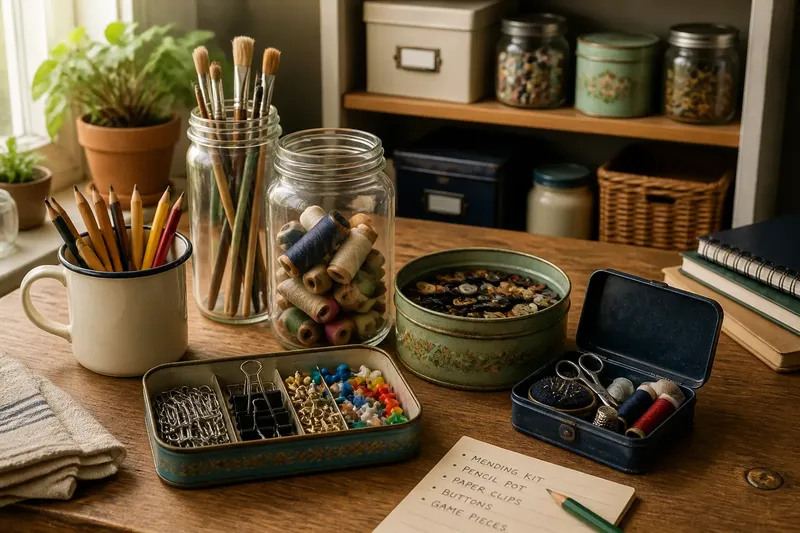
A reused container works best when its shape already suits the job waiting for it. For reuse containers around the home, start with the object you need to hold, not the empty jar that has been occupying the cupboard since Tuesday.
A broad glass jar may suit paintbrushes, while a shallow tin keeps drawing pins visible and a small box corrals spare buttons. Those matches rely on ordinary features: opening width, depth, stability, material and whether the contents need a lid. Treat the container as a tool with limits, not as an invitation to invent a new hobby in storage.
Start with the task
Choose a specific recurring task before choosing a container. “Keep the bits for mending a hem together” is more useful than “find something for this jar”. The first gives you a clear test: can the needed items fit, remain easy to retrieve and return to their place?
Look at the items as they are actually used. A sewing kit might include a few reels of thread, scissors, needles in a case and spare buttons. A container with a narrow neck could hold the reels but make the scissors awkward to remove. A low, wide box might accommodate everything without requiring a daily excavation.
Group only things that belong to the same task. A container for the small parts of a board game has a reason to exist; a container for assorted objects that happen to be small tends to become a drawer with better lighting.
Match the opening
The opening determines how easily contents go in and come out. For frequent access, choose a mouth wide enough for a hand or for the largest item. A jam jar can hold cotton buds or short pencils, but its neck may snag a tape measure or make a packet of clips difficult to grasp.
Use narrow containers for items that are slim, long or removed one at a time. A clean, tall jar can keep pencils upright on a desk. A narrow tin may suit spare knitting needles if they fit without catching at the rim. Avoid putting sharp tools into a vessel that forces your fingers to search blindly; a wider opening or a separate protective case is more sensible.
For small loose objects, consider whether a broad opening makes sorting easier. A shallow biscuit tin can hold paper clips, drawing pins or a few cable ties where they can be seen at a glance. If the contents are easily spilled, a lid that closes securely may matter more than quick access.
Choose by shape
Shape suggests a likely role, but it does not settle the question on its own. Use these starting points, then check the fit against the task:
- Wide-mouth jar: suited to chunky craft remnants, buttons or a small collection of corks, because the contents are easy to see and retrieve.
- Tall, narrow jar: suited to pencils, brushes or reusable straws that stand upright, provided the base is stable and the items do not jam.
- Shallow tin: suited to flat, small pieces such as paper clips, game counters or spare hooks, because nothing needs to be lifted out from underneath a deep layer.
- Small lidded box: suited to items that travel together, such as a compact sewing repair set or the pieces for one small game.
- Wide, low container: suited to a group of objects that needs to be browsed rather than stacked, such as fabric scraps or assorted greeting-card envelopes.
A container’s base matters as much as its sides. A tall jar with a narrow footprint can tip when a heavy tool leans against the rim. A squat, broad vessel is usually more settled on a busy desk or shelf.
Sort by situation
What suits a work surface?
For a desk or craft table, favour an open container that keeps frequently used items visible. A clean mug with a chipped exterior but no sharp edge might hold pencils, while a shallow tin can keep clips together. Keep the arrangement modest: if the container takes up more working space than its contents deserve, choose a smaller one.
What suits a cupboard shelf?
For occasional-use items, a lidded container can keep a small group together and reduce dust. A sturdy biscuit tin may suit spare game pieces or a packet of labels; a jar is useful if seeing the contents through the side makes identification easier. If several containers share a shelf, label the ones whose contents are not obvious.
What suits a drawer?
For drawers, height is the main constraint. A shallow tin can divide loose stationery or keep small mending supplies from scattering, but a tall jar wastes vertical space and may stop the drawer closing. Check the container in the drawer before filling it, rather than discovering the mismatch after everything has been sorted.
What suits something used outdoors?
For a portable outdoor task, use a container that closes and can be carried without its contents shifting freely. A small lidded box may hold chalk or a few plant labels for a garden visit. Glass is less appealing where it could be dropped on paving, so a sound plastic tub may be the more practical reuse if it is clean and suitable for the contents.
Check material and condition
Only reuse a container that is clean, sound and appropriate for what it will hold. Inspect the rim, seams, base and lid. A cracked jar, a tin with a sharp burr or a box with a loose hinge can turn a tidy idea into an irritating one.
Keep repurposed containers for dry, non-food household items unless their original packaging and the relevant instructions make another use suitable. A vessel that once held a substance with a strong smell or residue should not be reassigned casually. Materials and closures vary, so follow the container’s label or manufacturer’s instructions where those determine suitability.
Do not use an ordinary reused jar as a substitute for purpose-made storage for medicines, hazardous products or anything that must be unmistakably identified. Those items need packaging and labelling appropriate to their use, not a charming vessel rescued from the recycling box.
Questions about reuse containers?
Should every spare jar be kept?
No. Keep one only when it fits a task you can name and its condition is sound. If the cupboard already has a suitable container, the spare jar has not yet earned another job.
Is glass better than plastic?
Neither material is automatically better for every household task. Glass is useful when a stable base and visible contents help, while a suitable plastic container may be lighter for portable use; choose according to the task and the container’s condition.
How can I stop small items getting lost?
Use a shallow container, a lid or a smaller inner box, depending on whether access or containment matters more. For tiny pieces, keep them in a labelled packet inside the larger container rather than letting them settle into an unhelpful layer at the bottom.
What if the container is slightly too large?
Try it with the full set of items and consider whether the extra space serves a clear purpose, such as room for a hand or for later additions. If the contents slide around and the container occupies valuable space, a smaller one is the better match.
Try a real fit
Say you have a clean, wide jam jar and a loose collection of wooden clothes pegs used to seal open packets. The jar is stable, the pegs fit through its mouth and the contents are easy to spot, so it could sit near the cupboard where the packets are kept. If the jar’s height makes it awkward on that shelf, a shallow tin may be easier to reach; the task stays the same, but the location changes which shape fits.
That is the useful test for reuse containers: does the shape make a household task simpler without creating a new nuisance? Match the opening to access, the depth to the contents and the material to the setting. Then put the container where the task happens, not where the empty jar happened to be standing.