Open Basket or Lidded Box? Choosing Storage for Things Used Often
Open basket or lidded box storage is easier to choose when you match access, visibility and tidiness to how often an item is used.
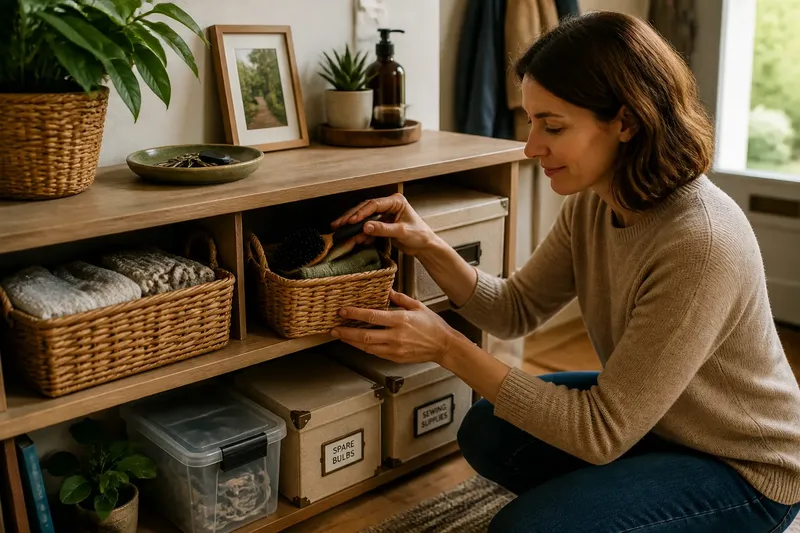
An open basket or lidded box works best when it suits the way you reach for what is inside. For frequently used things, open storage makes retrieval quick; a lid hides visual clutter and can keep dust off, but adds a small task every time you need something. The sensible choice depends on the item’s routine, not on a rule that every shelf should match.
Which works for daily use?
For items used several times a day, an open basket or tray is usually the easier option. You can see what is there and put it back without lifting a lid, which matters for the tea towel used after washing up, the hairbrush kept near the mirror or the dog lead by the door.
Open storage does ask you to tolerate seeing the contents. A basket of neatly folded cloths can look settled; one filled with tangled charging cables may look like the cables have taken up residence. Choose a container that fits the objects without requiring them to be arranged with ceremonial care.
A shallow tray can work better than a deep basket when small items are used often. Keys, hand cream and spectacles remain visible instead of sinking beneath each other. Keep the container near the place where the item is used, so putting it away is as easy as taking it out.
If you reach for something repeatedly during a task, keep its storage open and close at hand.
When does a lid help?
A lidded box makes more sense when the item is used regularly but does not need to remain visible between uses. Spare batteries, sewing notions, cables for occasional devices or children’s drawing materials may be easier to live with behind a lid, especially in a shared room or on an exposed shelf.
The lid also offers a barrier against dust and casual spills. It is not a substitute for suitable storage for delicate, damp or hazardous items, but for ordinary household supplies it can reduce the need to wipe every object individually. A fitted lid can also stop light items escaping when the box is moved.
Consider the full opening action. A hinged lid may be awkward beneath a low shelf; a removable lid needs somewhere to go while you search. If you must move other things, find the lid and then lift out a stack to reach the contents, the box may be tidy in appearance but cumbersome in practice.
For a box that is opened often, choose a lid that can be removed or hinged without disturbing nearby items.
How often is often enough?
There is no universal dividing line between “often” and “occasional”. Think in terms of the item’s normal routine: used each morning, reached for during a particular weekly task, or kept for an unpredictable need. The more regularly you need it, the more valuable direct access becomes. Less frequent use gives a lid more time to earn its place.
Also distinguish between the frequency of use and the number of objects used at once. A box of spare light bulbs may be opened rarely, but when it is, you may want to see the contents clearly. A basket of daily socks is touched often, but the contents are familiar enough that visibility may matter less than a tidy appearance.
Imagine you keep a lint roller in the sitting room and a spare refill beside it. If the roller is used every day, leave it in a small open holder; if the refill is changed only now and then, place that in a labelled lidded box nearby. The observable result is that the item used routinely stays easy to grab, while the spare does not need to sit in view.
What should stay visible?
Visibility is useful when it helps you notice an item, remember to use it or see whether it needs replacing. A basket of clean tea towels makes the next one obvious. A visible basket can also serve as a gentle reminder that a library book is due back or a reusable bag should go out with you.
But visibility can turn into visual noise if many unrelated things occupy the same surface. If a room feels busy, a lidded box can create a calmer view without requiring you to remove the items from the home. The point is not to hide everything; it is to decide which objects deserve to remain in sight.
For mixed contents, avoid using one open basket as a catch-all merely because it is convenient. Grouping related objects makes them easier to scan and return. A basket for current post, for instance, is more useful than a basket that quietly accumulates post, batteries and a screwdriver.
Will the container fit?
The container should suit both its contents and its location. An oversized basket can become a temptation to add unrelated items, while a small box that needs careful packing can make ordinary use irritating. Check whether the objects can be removed and returned without catching on the rim or forcing the lid shut.
For a narrow shelf, a box with a flat lid may be easier to stack than a soft-sided basket. For a hallway, a sturdy open basket may be simpler to use while carrying keys or a scarf in one hand. In a bathroom, consider whether the container’s material and placement are suitable for the room’s moisture; a lid will not make unsuitable material last.
Labels are helpful when a lidded box’s contents are not obvious. Use a plain description such as “spare bulbs” or “shoe-care supplies”, rather than a label so broad that it could mean almost anything. If you often forget what is inside, a clear-sided box may offer some visibility without leaving everything exposed.
Which storage suits each item?
Use these common cases as starting points, then adjust for your room and routine:
- Keys and daily access cards: An open dish or shallow basket near the exit makes them easy to spot and return.
- Frequently used cleaning cloths: An open basket near the cleaning area avoids an extra lid-opening task, provided the cloths are clean and dry before storage.
- Occasional sewing supplies: A lidded box keeps small pieces together and out of view; a clear box or label helps identify it.
- Current paperwork: A dedicated open tray can make incoming items visible, but it should have a clear purpose rather than becoming a general dumping place.
- Spare cables and adapters: A lidded container can keep them visually contained; use separate ties or small pouches if different cables are difficult to distinguish.
- Children’s everyday drawing tools: An open caddy can make choosing and returning pencils easy, while a lidded box may suit supplies brought out only for longer projects.
For products with particular storage requirements, follow the label or manufacturer’s instructions; local rules may apply to some household materials.
How can you tell if it works?
A storage choice is working if the item is easy to retrieve and reasonably easy to put back. Notice what happens during an ordinary week: do you leave the lid off, place the item beside the box, or keep moving the container to reach something else? Those habits are useful evidence that the arrangement is asking too much of you.
Try changing only the container, not the whole room. If a frequently used item sits in a lidded box, move it to an open basket and see whether access improves without making the surface feel untidy. If an open basket gathers dust or makes the room feel crowded, try a lidded alternative in the same location.
Keep the contents and location constant while you compare the two arrangements. Otherwise, it is hard to tell whether the improvement came from the lid, the basket or simply moving the item closer to where it is needed.
Which option answers your concern?
Are open baskets untidy?
Not necessarily. A basket looks calmer when it holds a small, related group of items that fits without spilling over the rim. If the contents are varied or awkward, a lidded box may suit the room better.
Do lidded boxes keep dust out?
A well-fitting lid can reduce dust settling on stored contents, though it does not make a box airtight or suitable for every material. Choose storage according to the item’s needs, and keep anything that must stay dry or ventilated in an appropriate place.
Can I use both types together?
Yes, and many routines benefit from it. Keep the items used most in an open container and less-used spares in a labelled box close by, so both are accessible without making every object visible.
What if I keep forgetting what is in a box?
Add a clear label or choose a transparent box, then place it where you are likely to look for those contents. If you still forget it exists, the container may be too far from the task it supports.
Choose for the routine
For open basket or lidded box storage, start with the action you repeat: reaching, replacing, carrying or checking. Open storage earns its place when seeing and taking the item matters; closed storage earns its place when a calmer surface or a little protection matters more. Neither option is inherently neater.
Make the decision for the object, not for an idealised shelf. A small open holder for daily keys and a labelled box for occasional spares can coexist without looking like a storage philosophy. The useful arrangement is the one that lets you find what you need and return it without negotiating with a lid.