Parlour Pastimes and Shared Materials in the Home
Parlour pastimes show how shared household materials supported games and handwork; learn how to organise a small collection for easy borrowing and return.
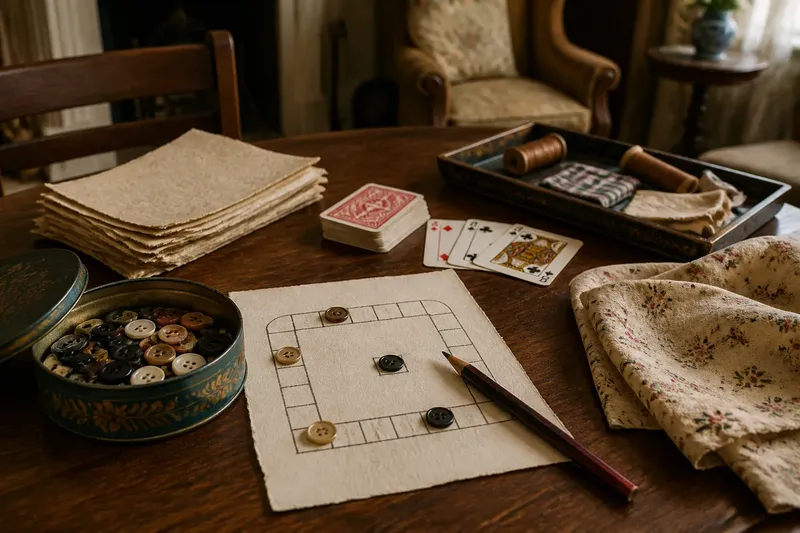
Parlour pastimes relied on shared household materials, not a room reserved for leisure. A table used for conversation or everyday tasks could also host a game, drawing or handwork, provided its materials were easy to find and return.
Rooms in use
The parlour was a flexible setting for conversation, music, games and handwork. What happened there depended on the household and its routines; there was no single arrangement that applied everywhere. A clear table and movable chairs could accommodate an activity without turning the room into a permanent workshop.
That flexibility shaped how people used the space. A game might need to pause for another household purpose, while a sewing task could be set aside and resumed later. The practical concern was not how little equipment an activity required, but whether its materials and progress could be managed alongside other uses of the room.
Objects with several uses
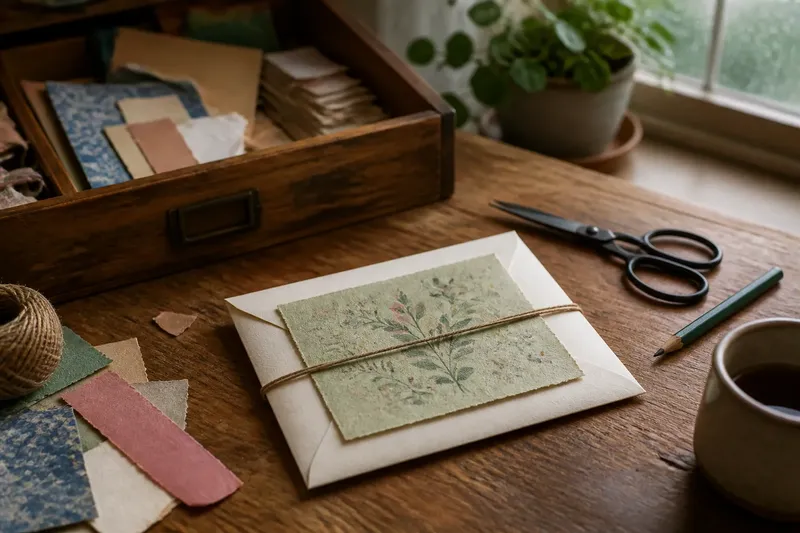
Paper, pencils, playing cards, thread and fabric offcuts could serve different purposes. Paper might be used for drawing or a written record of game rules; cards could support familiar games; thread and scraps were suited to mending or handwork. Which objects were available varied from household to household.
Using shared objects called for care. Paper used for a game could not also be kept clean for a note, and fabric used in a repair was no longer an untouched scrap. Before borrowing something, it helped to know whether it was expendable, needed for another task or valued by someone else.
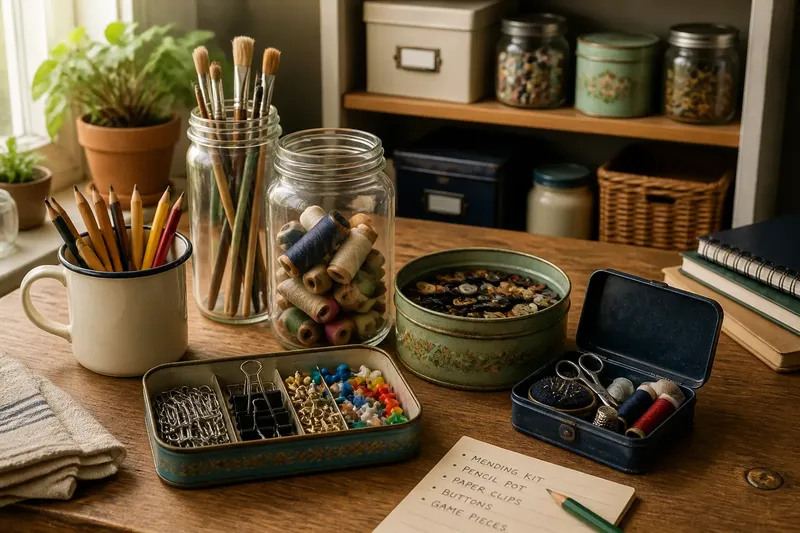
Say a household has scrap paper, a pencil and a tin of buttons, all explicitly treated as available for play. Someone draws a simple board on one sheet, and the buttons mark positions; when the game ends, the paper goes to recycling or scrap storage and the buttons return to their tin. The visible result is a cleared table and a known destination for each item, rather than an unexplained scatter of pieces.
Agreements for sharing
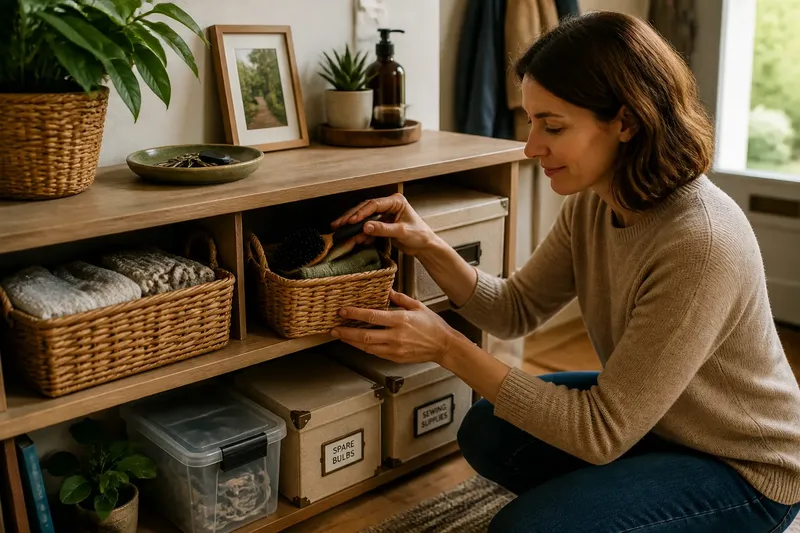
Shared materials work best when their status is clear. A household can distinguish objects anyone may borrow from supplies reserved for a particular task. A tray, envelope or sewing tin can hold the pieces of an activity together, while a brief note can record where a game stopped.
- If paper is marked as scrap, use it for a game or drawing; if it is reserved for notes or schoolwork, choose another sheet.
- If a pencil is common household stock, borrow it and return it to its usual place; if someone relies on it for a specific task, ask first or use another pencil.
- If buttons are loose and available for play, use them as counters and return them to their container; if they are needed for a repair, leave them aside and choose another marker.
- If fabric offcuts are designated for handwork, use a suitable piece; if the cloth is part of an unfinished repair or valued project, do not cut it and find another material.
- If a game can be stopped without losing its state, gather its pieces in a tray; if the board must remain visible, agree on a place where it will not obstruct another task.
- If an item is fragile or difficult to replace, keep it out of casual circulation; if a common substitute exists, use that instead.
These decisions are small, but they prevent a shared collection from becoming a search problem. Put borrowed materials back where the next person expects them.
What makes sharing work?
How can a game be paused fairly?
Agree before play on whether a position can be left in place or should be recorded. If the board must be cleared, a short note about the current turn and position helps players resume without arguing over a memory.
Which materials are suitable for shared use?
Choose items whose owner or purpose is clear and whose temporary use will not spoil another task. Common counters and scrap paper may be suitable; an item needed for a repair should stay available for that repair.
How should unfinished handwork be kept?
Keep the cloth, thread and any pattern together in a container, and place it somewhere that does not obstruct the room. If another person needs the container or surface, agree where the work can wait before setting it aside.
What is the trade-off with purpose-made supplies?
Specialised materials may suit a particular activity, while shared household objects can serve several purposes. The latter demand clearer agreements about ownership, condition and return; the choice depends on what the household already has and how it is used.
A worked arrangement
Imagine a household wants to play a word game at a table that will later be needed for another task. Its explicitly hypothetical starting supplies are scrap paper, one pencil, a deck of cards and a tin of buttons. First, the players check that the paper is genuinely scrap and that the pencil and buttons are free to borrow. They write the game prompt on the paper, use cards to decide whose turn comes next, and keep the buttons out of play because they are not needed. When the table must be cleared, they put the cards and pencil away, place the used sheet with scrap, and leave the button tin untouched. The result is a completed game and an available table; the trade-off is that the paper is consumed as scrap rather than preserved for another use.
Keep the system modest
A shared collection need not contain every possible supply. It needs clear boundaries: what is available, where it belongs and what to do when an activity is interrupted. A small tray can hold common game materials, while sewing supplies or items needed for household repairs remain separate.
For parlour pastimes today, the useful principle is not to reproduce an imagined historical routine. It is to make borrowing and returning predictable. Choose one place for shared materials, mark items that are not for general use, and let the arrangement fit the room’s other purposes.
When a pastime ends, return each item according to its next use: store it, keep it with an unfinished task or set aside what has been consumed. That final distinction is what makes shared materials genuinely useful rather than merely shared.